
ResellerIO
A seller workspace that turns a few item photos into structured inventory, pricing context, prepared images, and marketplace-specific listing drafts.
- Role
- Product engineer and owner
- Focus
- Vision AI, inventory, images, pricing
- Stack
- Elixir, Phoenix, PostgreSQL, AI APIs
- Status
- Independent product · Active
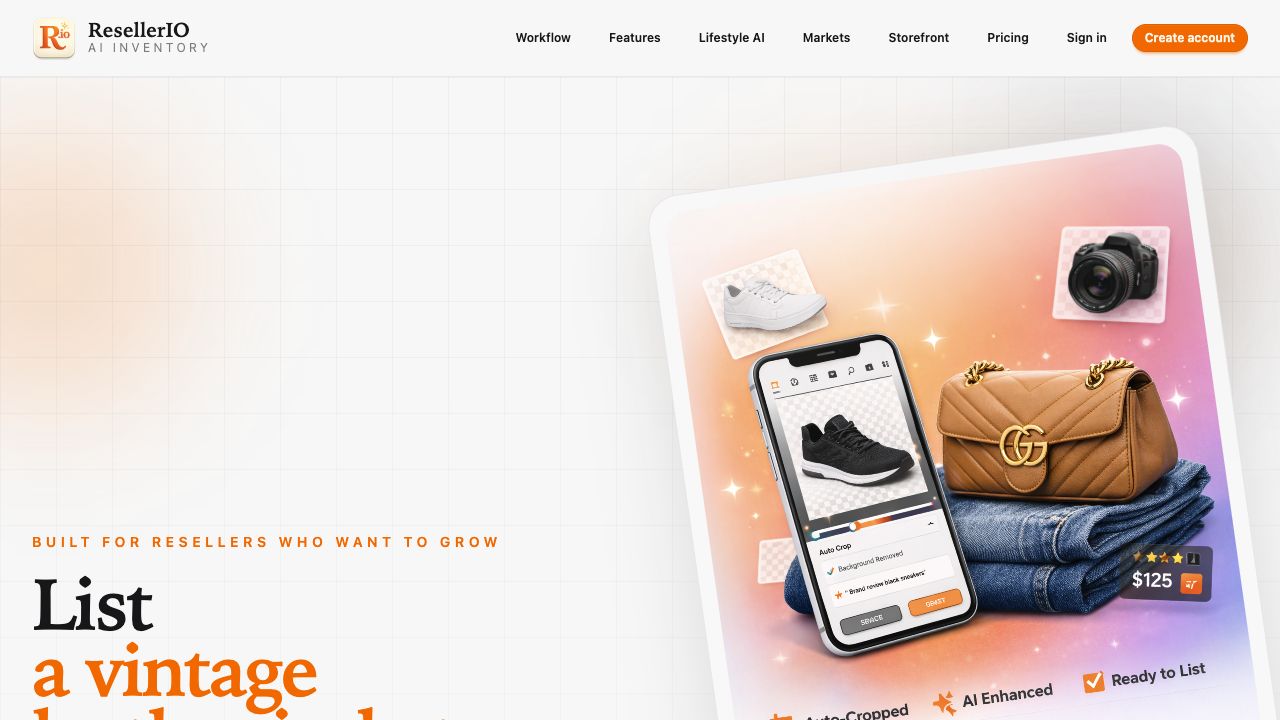
Selling one item creates a surprising amount of work.
A reseller must identify a product, research a price, write accurate copy, crop and clean photos, adapt details to different marketplaces, and keep the source inventory consistent. Repeating that process for every item turns selling into data entry.
Start with the evidence sellers already have.
ResellerIO begins with item photos. AI proposes a structured inventory record, while the seller stays in control of the details and final output.
- Identify likely category, brand, condition, attributes, and visible details from uploaded photos.
- Research comparable listings and turn them into useful pricing context.
- Remove backgrounds and produce clean or lifestyle image variants.
- Generate titles, descriptions, tags, and attributes for 13 marketplace formats.
- Keep product facts and reusable assets together in one inventory record.
- Share selected inventory through a public seller storefront and direct inquiry links.
Automation prepares the work; the seller publishes it.
Recognition, pricing, and generated copy can all be uncertain. The product presents them as editable drafts with source images and product facts close at hand. It does not pretend that a model can guarantee condition, authenticity, or the right sale price.
That boundary also keeps marketplace publishing deliberate: ResellerIO prepares consistent assets and copy, while the seller reviews and decides where to list.
One workflow across models, media, and product data.
I designed the inventory model, AI-provider routing, prompts, review flow, media pipeline, pricing experience, asset generation, public catalog, deployment, and operating safeguards. The difficult part was not generating a description; it was making every generated result traceable to a product the seller could understand and edit.
Oceanowledge
See how portable source files become structured courses, books, lessons, quizzes, and progress.